From Blood, Sweat and Tears to Coronary Artery Disease
What decades of stress, missed sleep, and putting the job first can eventually collect from the provider.
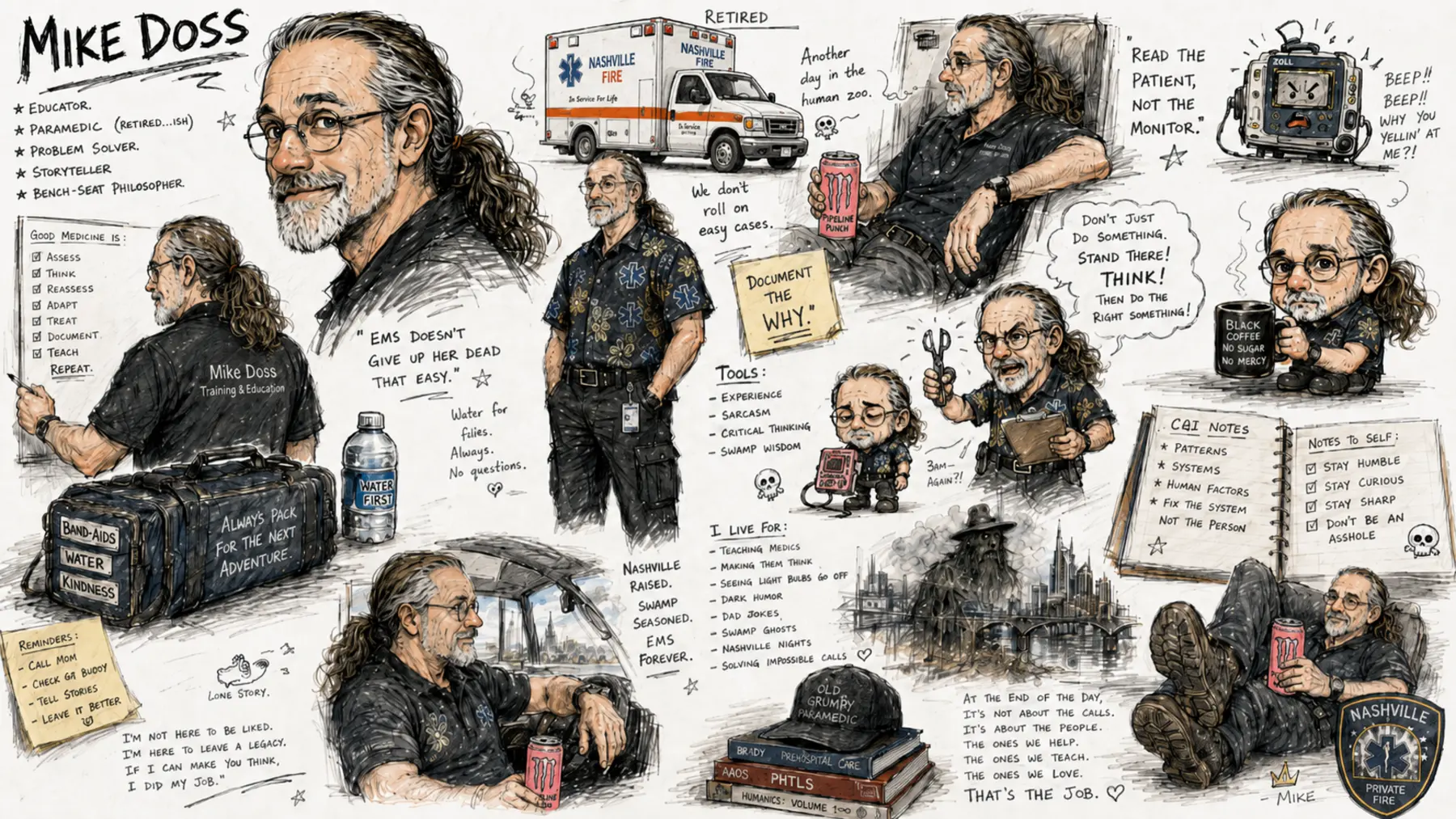
Mike Doss spent thirty-two years in 911 EMS before retiring from the Nashville Fire Department—and then discovered he apparently wasn’t finished having opinions.
Paramedic, educator, writer, and lifelong student of what happens when clinical reality collides with institutional nonsense, Mike writes from the perspective of someone who has occupied the bench seat, the classroom, and more meetings than any reasonable person should survive.
The bench seat was where lessons got taught before they became PowerPoints. It was where partners talked through calls, mistakes were admitted, judgment was sharpened, and the human being behind the patient was remembered.
This publication continues that conversation: direct, reflective, patient-centered, and occasionally seasoned with language unsuitable for the employee newsletter.
Competence matters. Character matters. The affective domain matters. And no credential, title, or clever rebranding exercise can substitute for doing right by the person on the stretcher.
Holler at OGPSeven published pieces examining EMS education, patient care, provider health, and the uncomfortable lessons the profession occasionally needs to hear.
What decades of stress, missed sleep, and putting the job first can eventually collect from the provider.
A candid welcome for new clinicians stepping into the responsibility, absurdity, and privilege of EMS.
Why difficult testing is not personal—and why understanding the work matters more than memorizing the answer.
The packaged hero story stripped away to reveal what the job can leave behind—and why silence is not strength.
Technology helps, but kindness, eye contact, dignity, and human connection remain the most advanced tools aboard the unit.
A case for preparing students to think, adapt, and cope when flawless performance still cannot guarantee a tidy outcome.
The published response to the debate—clarifying progressive stress exposure, psychological safety, structured debriefing, and the original argument.
Mike Brown, William Belk, and Mike Doss discuss scenario design, learner safety, resilience, and preparing clinicians for unpredictable high-stress realities.
Listen at JEMS →